Mass Exodus
Part One: The Flight
I was a few months younger than my five-year-old is now when we had to flee for our lives back in 1991, during the Kurdish uprising that followed the genocide, chemical attacks, and the Arabization of Kurds in Iraq.
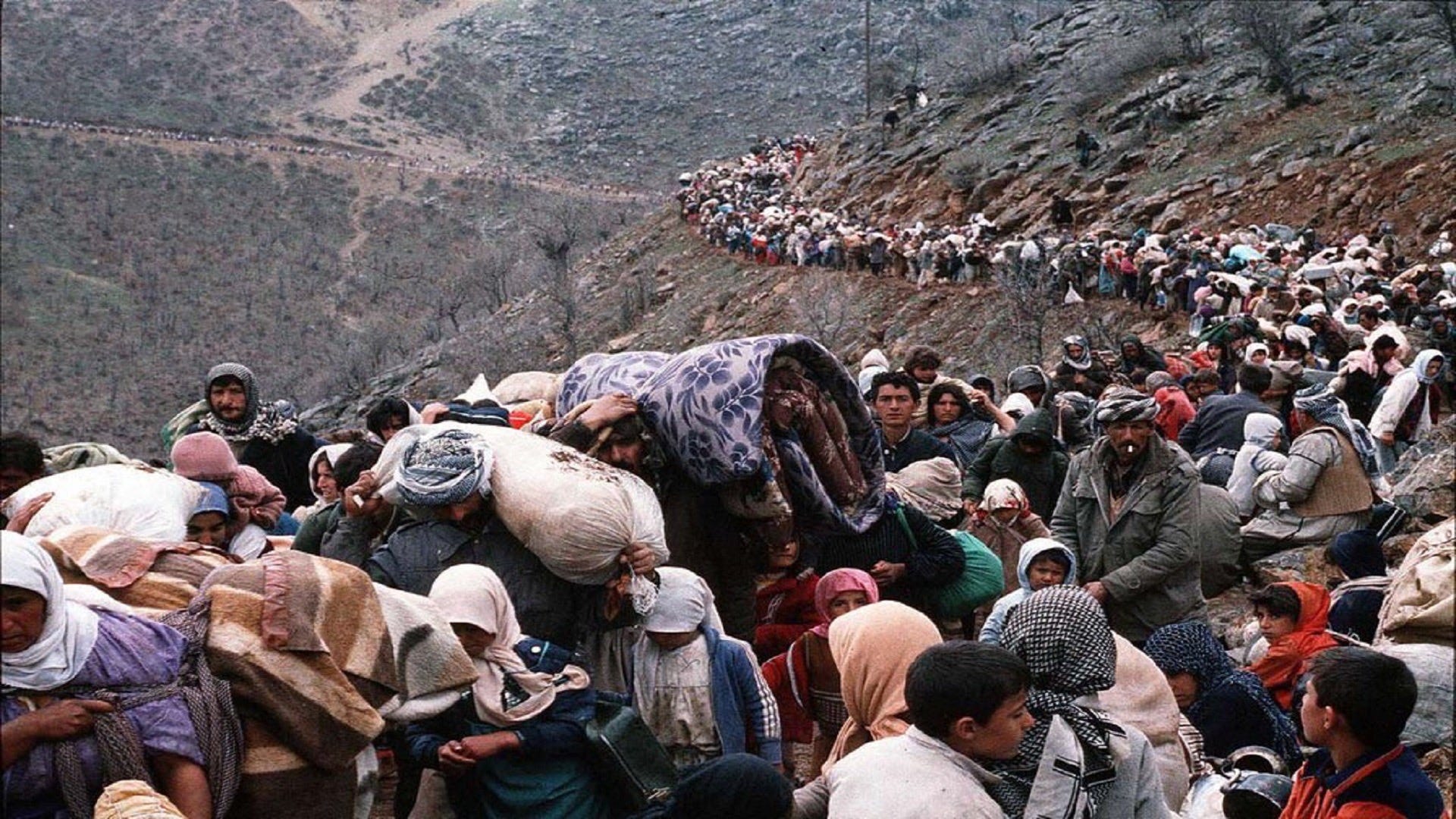
Picture is from Ark media archives.
I remember every detail vividly.
Most of all, I remember how hungry we all were.
It was spring. My then-little sister was only a few days old. We were sleeping on mattresses in the yard, under the stars.
Before that fateful night, we had been living under war. Shrapnel would fall into our yard multiple times a day. I can still hear the fighter planes and the sound of the bombs they dropped. My three-year-old sister used to play with the small pieces of shrapnel as they fell into our yard. My brother and I were terrified. We would all curl up with Nana (that’s what we called Granny) and shiver as the bombs were being dropped. Always in the same corner. Nana comforted us with her warm touch.
In the days leading up to that night, the grown-ups were stressed in a way even we children could feel. They were always talking in low voices, mentioning flight, asking who was still left on the block and who had already gone. There was so much talk about food, money, cars, and how to leave before it was too late. And how much no one wanted to leave.
Then, that night, while we were sleeping on mattresses in the yard under the stars, dad woke me and whispered, “It is time.” I can’t recall exactly, hut something felt as though I was prepared for that night. As though a plan was shared with me and my role was clear.
Dad put us all in the back of a lorry. Only the women and children. It was after midnight. The lorry was hard, cold, and wet. There were many, many other women and children in the back of the lorry. In fact it was packed. My infant sister was placed on my lap while I squatted on the wet, cold lorry floor. My mom had another three children with her, two of whom were younger than me, four and three. My Nana was with us.
I remember women weeping. Everyone curling into themselves and scared. My feet were numb, and I could not feel them for a long time. I cannot make out now exactly how I was feeling back then, but looking back, I believe I was confused and scared.
At some point, my mom looked at my infant sister in my lap and saw that she was not breathing.
She panicked.
“Make room, make room,” she shouted with a coarse voice. “She needs air. She will die. Lift her up. Please, move.”
Her voice sounded like the screechy sound that comes from two worn-out metals rubbing against one another.
They lifted her up.
She gasped.
And came back to life.
It was the most harrowing sound one could hear.
The ride was extremely long. I remember it feeling like days. The road was bumpy and curvy, and the lorry kept throwing us against one another. I do not know how long it actually took, only that, inside my five-year-old body, it felt endless.
We made it to Erbil, to my dad’s cousin’s home. It was morning by then. In the small yard, there was a huge bucket of water. We kids stayed in the yard while my mom tried to figure out the keys to open the doors to the house.
My three-year-old sister was curious about the water and thirsty. Somehow, she fell inside.
I remember her legs pointing at the sky and thrashing.
I ran to Mom and told her my sister was dying. Mom came and was mad. I was supposed to keep an eye on them.
I was only five.
Mom pulled her out of the water and forced the water out of her lungs. My sister’s face was blue. She finally let the water out and coughed and cried.
She was going to live.
Then Dad joined us, and we continued the journey from Erbil to Rojhelat, East Kurdistan, or what is known today as Iran.
On the way there, my dad was driving his Corona. My mom sat right behind him, and all of us kids, all five of us, were piled up on her. Next to Dad was Nana. Next to us in the back seat was Dad’s sister and her three teenage children.
It was tight, and Mom was pissed and worried about her family.
Two of my younger uncles, Dad’s brothers, were walking beside the car. Cars were barely moving because every Kurd was fleeing, on foot and in cars.
The scene was nothing short of Dante’s circles of hell.
People were worn down. Many were carrying their children or their sick on their backs in self-made wraps. People were moving in lines as far as one could see. On the side of the road, some people, women only, were baking bread or cooking food.
Some people abandoned their children or other weaker family members that couldn’t walk because they could no longer carry them.
Some people fell dead and were left on the sides of the roads.
Dad kept conversing with his brothers through the window. They were talking about news. And whether we would ever be able to go back. We, too, stopped at times so Mom could bake us bread or make food out of what we had on us. My siblings were young and kept alternating between wanting to eat and wanting to go to the toilet.
I was silent and observing.
We parked our cars at night. The NGOs came. The grown-ups called them haupaimani, allies. They gave us apples, of all things.
It was ironic because in Kirkuk, we had been watching for the scent of apples every day. That was what the gas used in Halabja smelled like.
We ate them without questioning.
We were starving.
We got news that my aunt had given birth to a girl in a tent. She had been nine months pregnant, and her husband was already missing by then, taken by the Iranians during the war.
I remember going to pee with my brother, who was three years older than me. It was nighttime. We went alone. When we came back, we opened the car door and sat down on a lap, only to find out it belonged to another woman and not our mother.
We were yelled at.
We quickly ran out and found our car.
No one had noticed we were gone.
"cars were barely moving because every Kurd was fleeing, on foot and in cars." oh, sometimes stories just put "history" or statistical numers/titles into perspective... :(
This is harrowing. I should have words but I just feel a profound sadness.